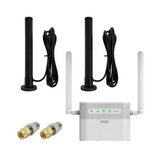
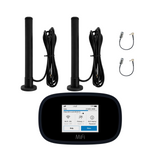
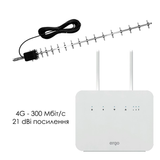
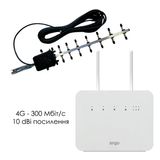
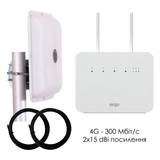
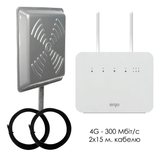
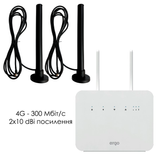
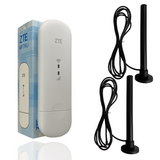
External Antennas and Mobile 4G Routers: Why a Broken Antenna Connector Is Not a Warranty Case and Never a “Factory Defect”
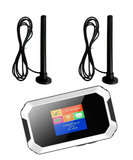
Mobile 4G Wi-Fi routers with support for external antennas have long ceased to be “magic boxes” that work regardless of user actions. Devices such as the Olax MT80 are structurally designed for correct and careful antenna connection, not for forceful installation, experimentation, or attempts to “push harder so it works better”.
The antenna interface is precisely the part of the device where user errors most often lead to physical damage, which has no connection to product quality or manufacturing defects.
What a CRC9 Antenna Connector Really Is
CRC9 is a miniature coaxial RF connector used in mobile LTE devices due to its compact size. Its key characteristics are:
-
it is not a load-bearing connector;
-
it is not designed to withstand mechanical stress;
-
it is soldered directly to the PCB, without structural reinforcement;
-
it is intended solely for electrical connection, not for holding cables, adapters, or antennas.
In other words: CRC9 is a contact point, not a mounting bracket.
Typical User Actions That Lead to Damage
In the overwhelming majority of cases, antenna connector damage does not occur “by itself”. It results from the same recurring user actions:
-
applying excessive force while inserting the adapter, expecting a “click”;
-
pushing the adapter fully in until it stops, ignoring the connector design;
-
allowing the antenna cable to hang on the connector, creating leverage;
-
subjecting the connector to side or twisting loads;
-
moving or dropping the router with an antenna connected.
The outcome is always the same: the connector is torn off the PCB or its contact group is damaged.
This is mechanical damage, not a device malfunction.
Why This Is Not Covered by Warranty
Warranty coverage applies to:
-
manufacturing defects;
-
electronic component failures;
-
faults not caused by physical interference.
Warranty does not cover:
-
mechanical damage;
-
signs of excessive force;
-
broken or torn-off connectors;
-
damage caused by improper connection of accessories.
An antenna connector cannot “fail on its own” without applied force.
If a connector is torn off, it means force was applied by the user.
For this reason, such cases are classified as non-warranty, regardless of the device’s age or operating time.
An External Antenna Does Not Turn a Mobile Router into a Stationary Device
One of the most common misconceptions is treating a mobile router as a stationary device once an external antenna is connected.
The Olax MT80 remains:
-
a compact mobile router;
-
with a lightweight PCB;
-
with miniature RF connectors.
Connecting an external antenna does not transform it into base-station-grade equipment and does not make the antenna interface a structural element.
User Responsibility
The user bears full responsibility for:
-
the method of antenna connection;
-
preventing mechanical stress on the connector;
-
correct use of adapters;
-
maintaining the physical integrity of the device during operation.
The manufacturer and seller cannot and must not be held responsible for:
-
improper user actions;
-
applying force where none is intended;
-
ignoring basic rules of RF equipment handling.
About Repairs and “Why It Takes So Long”
Repairing a torn-off CRC9 connector involves:
-
microsoldering;
-
working with multilayer PCBs;
-
restoring RF traces;
-
rechecking the RF path.
This is a complex, expensive, and time-consuming process that:
-
is performed only on a paid basis;
-
has no relation to warranty obligations;
-
takes significantly longer than a simple device replacement.
A Conclusion Without Diplomacy
If an antenna connector in a router is broken, this is not a “device problem”.
It is the direct result of incorrect user actions.
A mobile 4G router is an electronic device, not a mechanical structure.
An antenna connector is an electrical contact, not a cable handle.
An external antenna is a signal optimization tool, not an excuse for forceful installation.
Following these basic facts ensures normal operation.
Ignoring them guarantees problems — for which the seller bears no responsibility.