How to Properly Use a GSM/LTE Repeater to Avoid UDCR Complaints
The use of repeaters (mobile signal boosters) in Ukraine is regulated by the State Enterprise "Ukrainian State Centre of Radio Frequencies" (UDCR). To ensure stable mobile communication and avoid problems with regulators, it's important to follow certain rules and recommendations.
Main UDCR Complaints
UDCR may issue complaints for the following key violations:
-
Exceeding the permissible signal power limits.
-
Creating interference with mobile network operators.
How to Avoid Violations
Using Attenuators to Reduce Signal Power
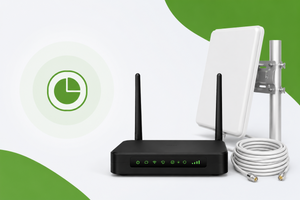
Attenuators are special devices inserted into the coaxial cable between the external antenna and the repeater. They reduce the signal level by a specified number of decibels (dB), allowing precise signal power regulation.
Common Attenuator Values for Ayissmoye V.B378 Kit (9 dBi):
-
3 dB – for minimal signal adjustment in cases of slight power excess.
-
5 dB – for moderate signal reduction in most typical use cases with minor UDCR concerns.
-
10 dB – recommended when the base station is nearby (within 3 km) and the signal is too strong.
-
15 dB or more – in cases of critical signal overload, especially when the base station is very close (within 1 km).
When and How to Use Attenuators:
Attenuators are recommended in the following situations:
-
If you receive warnings or remarks from operators or UDCR representatives regarding excessive signal power.
-
When the repeater behaves unstably, indicating possible signal self-oscillation.
-
If the nearest base station is less than 3 km away and the signal is overly strong.
-
When using high-power repeaters and there is a risk of regulatory violations.
Attenuator Installation Procedure:
-
Turn off the power to the repeater.
-
Disconnect the cable going from the external antenna to the repeater.
-
Connect the attenuator to the repeater's input.
-
Reconnect the external antenna cable to the attenuator.
-
Turn the repeater back on and check the signal level.
-
If necessary, change the attenuator value or adjust the antenna positioning to optimize the signal.
Proper Antenna Placement
To avoid interference:
-
The external antenna should be placed as far as possible from the internal antenna, ideally separated by walls or ceilings.
-
Point the external antenna directly toward the mobile operator's base station.
-
Avoid direct signal feedback between the external and internal antennas.
Use High-Quality Cables and Connectors
Using high-quality coaxial cables and connectors helps reduce signal loss and avoid interference issues, decreasing the need for excessive amplification.
Regular Monitoring
Regularly monitor your repeater’s operation using built-in monitoring features (such as an LCD display). Timely checks help detect and resolve potential issues quickly.
What to Do If UDCR Issues a Complaint
If the UDCR presents a complaint:
-
Immediately reduce the signal power (use attenuators or adjust antenna positions).
-
Request a professional check and configuration of your equipment.
Additional Information on Certification
While certification is not the main focus of this article, it is still recommended to use equipment that meets Ukrainian technical standards and has proper documentation.
Conclusion
Proper configuration of GSM/LTE repeaters, the use of attenuators, and compliance with antenna installation guidelines will help you avoid UDCR complaints and ensure reliable, stable mobile communication in your premises.