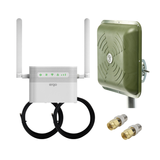
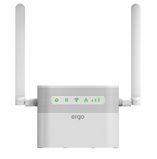
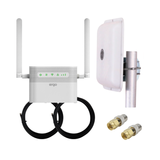
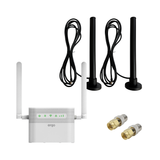
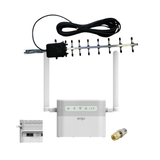
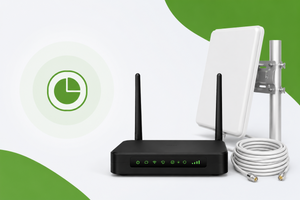
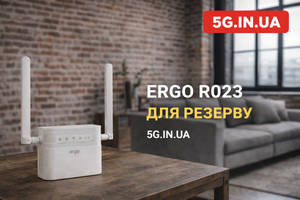
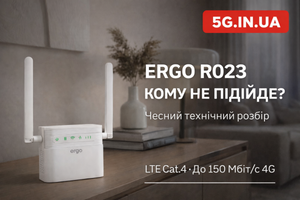
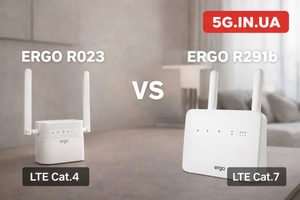
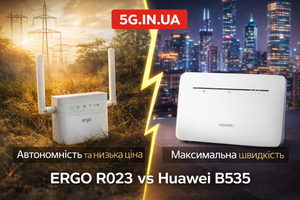
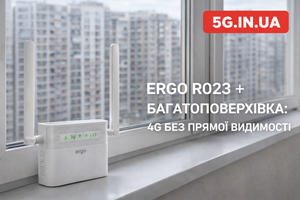
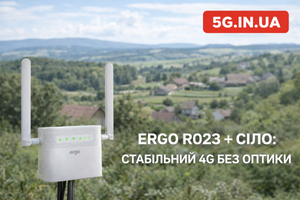
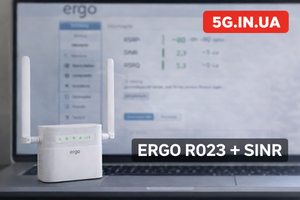
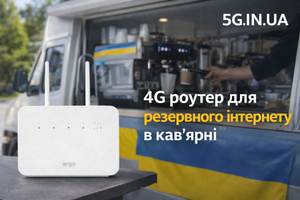
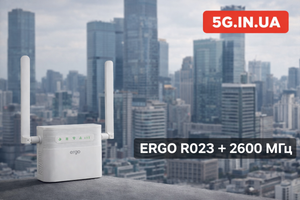
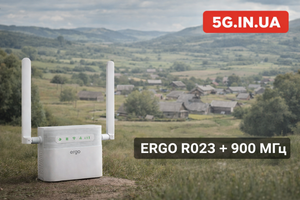
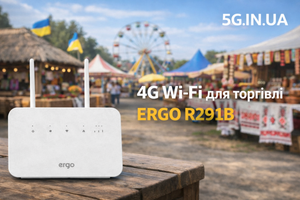
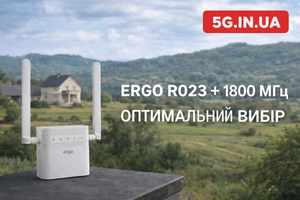
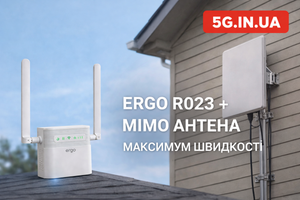
MIMO 2×2 in ERGO R023 allows two independent data streams to be transmitted simultaneously using two transmit and two receive antennas. In LTE networks, this increases throughput and link stability through spatial multiplexing. Theoretically, 2×2 MIMO can double data rates compared to SISO (1×1), but the real-world gain depends on signal quality (SINR), multipath reflections, and base station configuration. ERGO R023 provides full hardware support for 2×2 MIMO through two SMA connectors designed for external antennas. To fully utilize MIMO, a proper dual-polarized MIMO antenna (or two correctly configured antennas) is required. Under suitable radio conditions, this results in higher speeds and fewer retransmissions.
What MIMO 2×2 Means in Simple Terms
MIMO (Multiple Input Multiple Output) is a method of transmitting multiple data streams simultaneously using multiple antennas.
In a 2×2 configuration:
-
2 transmit antennas at the base station
-
2 receive antennas in the router (ERGO R023)
This enables:
-
Simultaneous transmission of two independent data streams
-
Spatial multiplexing
-
Higher spectral efficiency
In traditional SISO (1×1), only one data stream is transmitted.
In MIMO 2×2, two streams are transmitted at the same time.
How MIMO Is Implemented in ERGO R023
Hardware Architecture
ERGO R023 is an LTE Cat.4 router supporting:
-
LTE FDD 900 / 1800 / 2600 MHz
-
2×2 MIMO
-
Two SMA connectors for external antennas
The two SMA ports are independent RF paths — not backup connectors.
For full MIMO functionality, you need:
-
Two separate antennas, or
-
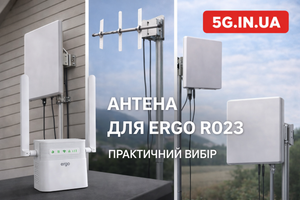
One dual-polarized MIMO panel antenna with two cables
How MIMO 2×2 Works in LTE
1. Spatial Multiplexing
The base station transmits two different signals on the same frequency channel.
Through differences in:
-
Phase
-
Polarization
-
Multipath reflections
The receiver separates the signals using advanced decoding algorithms.
Result: twice as many bits transmitted in the same time interval.
2. Reflections Are Not Always Negative
In urban environments, signals reflect from:
-
Buildings
-
Metal surfaces
-
Vehicles
For SISO, reflections cause interference.
For MIMO, reflections create spatial diversity.
This is why MIMO often performs better in cities than in open rural areas.
Theoretical vs Real Speed
ERGO R023 (LTE Cat.4):
-
Maximum 150 Mbps (20 MHz, 64QAM, 2×2 MIMO).
Without MIMO (1×1):
-
Maximum ~75 Mbps.
This difference is not marketing — it is spectral efficiency physics.
Practical Example
Scenario 1: Single Antenna (1×1)
-
RSRP: -85 dBm
-
SINR: 18 dB
-
Speed: 40–60 Mbps
Scenario 2: MIMO 2×2 Antenna
-
RSRP: -85 dBm
-
SINR: 18 dB
-
Speed: 70–100 Mbps
The improvement comes from utilizing the second spatial stream.
Why One “High-Gain” Antenna Cannot Replace MIMO
Common mistake: installing one 20 dBi antenna instead of two 10 dBi MIMO antennas.
One antenna:
-
Improves signal strength
-
Does not create a second spatial stream
MIMO requires two independent RF channels.
Polarization and Antenna Orientation
A typical MIMO antenna uses:
-
±45° polarization
This matches LTE base station antenna configuration.
If using two separate antennas:
-
They must be polarization-separated
-
Or physically spaced apart
How MIMO Improves Stability
MIMO increases not only speed but also:
-
Reduces fading impact
-
Decreases retransmissions
-
Improves effective SINR
Result: a more stable connection.
Impact of MIMO on Power Consumption
With good signal:
-
Fewer retransmissions
-
Shorter transmission time
-
Lower average consumption
Properly implemented MIMO may even improve battery efficiency under stable conditions.
Technology Limitations
-
ERGO R023 is LTE Cat.4 (no carrier aggregation).
-
If the base station operates in 1×1 mode, MIMO cannot activate.
-
With low SINR (<5 dB), the second stream may be disabled.
-
Using only one antenna results in SISO mode.
-
At long distances (>20–30 km), MIMO efficiency decreases.
When MIMO Delivers Maximum Benefit
-
Urban environments
-
Signal level better than -90 dBm
-
SINR above 10 dB
-
Band 3 (1800 MHz) or Band 7 (2600 MHz)
When Improvement Is Minimal
-
Rural open areas with direct line-of-sight
-
Critically weak signal
-
Narrow bandwidth (10 MHz channel)
Why ERGO R023 Is Sufficient for Most Use Cases
LTE Cat.4 + 2×2 MIMO provides:
-
Balanced price-to-performance ratio
-
Full MIMO capability without overpaying for 4×4
-
Compatibility with Ukrainian LTE network deployments
In most regions, LTE base stations operate in 2×2 MIMO mode.
Practical Recommendations
-
Use a proper MIMO panel antenna.
-
Do not connect only one SMA port.
-
Install antennas with correct polarization.
-
Monitor SINR in the web interface.
-
Test performance at different times of day.
Conclusion
MIMO 2×2 in ERGO R023 is a real spatial multiplexing technology that enables two simultaneous data streams, increasing LTE throughput without expanding frequency bandwidth. With proper antenna setup and adequate signal conditions, performance can significantly exceed SISO operation.
ERGO R023 provides full 2×2 MIMO hardware support via dual SMA connectors, making it a technically sound solution for external MIMO antennas. Full specifications and compatible antenna solutions are available at 5G.IN.UA.
FAQ
1. Will ERGO R023 work with one antenna?
Yes, but it will operate in SISO mode without MIMO advantages.
2. Does speed always double?
No, the gain depends on SINR and base station configuration.
3. Is a special antenna required?
Yes, a dual-output MIMO antenna is recommended.
4. Does MIMO work on 900 MHz?
Yes, if the operator supports 2×2 MIMO in that band.
5. Does MIMO reduce latency?
Indirectly, by improving link stability and reducing retransmissions.
6. Is 4×4 MIMO necessary?
Not for LTE Cat.4. ERGO R023 supports 2×2 only.
7. Do I need to configure MIMO manually?
No, MIMO operation is handled automatically by the LTE modem.