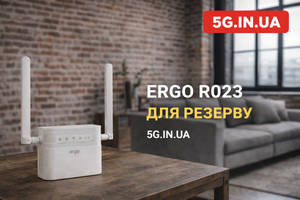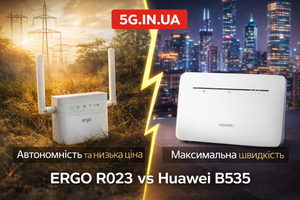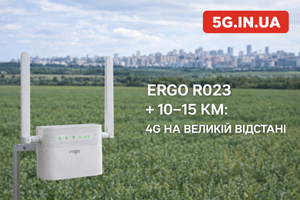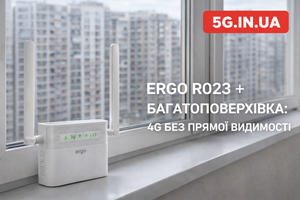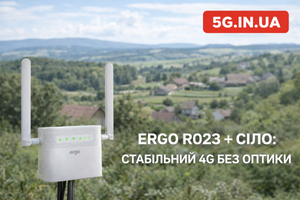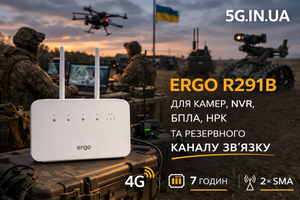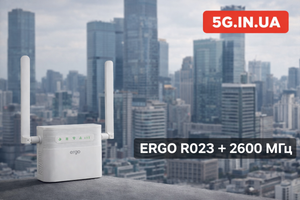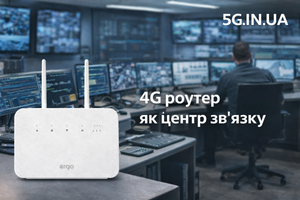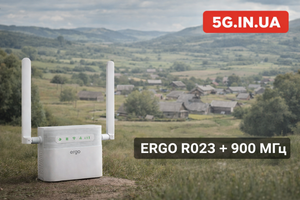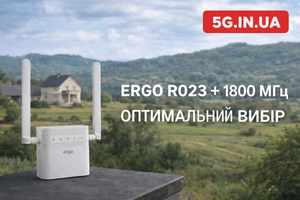
ERGO R023 is a full-featured 4G LTE Wi-Fi router with a built-in battery, LAN/WAN ports, and support for external MIMO antennas. A USB modem is a compact device designed to connect mobile internet to a single computer or a router with USB support. If you need internet for multiple devices, stable operation during power outages, external antenna capability, and backup connectivity — ERGO R023 is the technically stronger solution. If you only need to connect one laptop while traveling — a USB modem is more compact. The difference is not about “speed,” but about architecture and use case.
What Is ERGO R023 and What Is a USB Modem
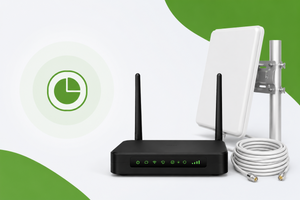
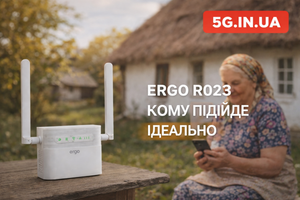
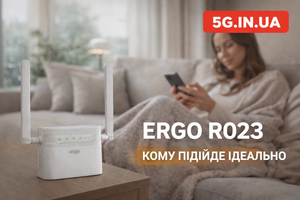
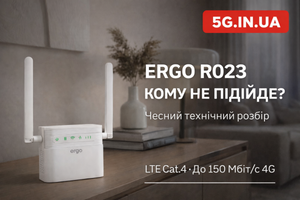
ERGO R023 is a 4G LTE router (LTE Cat.4 up to 150 Mbps download and 50 Mbps upload) with a built-in 4000 mAh battery, two SMA connectors for MIMO antennas, one WAN/LAN port, and one LAN port. It supports SIM cards in 900/1800/2600 MHz bands and can use 4G as a primary or backup connection.
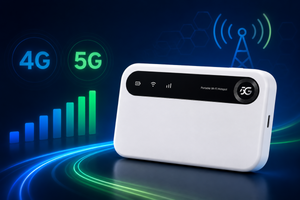
A USB modem (4G LTE dongle) is a compact device that plugs into a USB port on a laptop or router. Its purpose is to provide mobile internet access to a single device or to operate through a specially configured router.
Both solutions “provide internet via SIM card,” but from a network architecture standpoint, they are fundamentally different.
Architectural Difference: Standalone Router vs Peripheral Modem
How a USB Modem Works
A USB modem is essentially an LTE module in a flash-drive form factor. It:
-
receives signal from the base station,
-
passes internet connectivity through USB,
-
does not create a full network infrastructure on its own.
If Wi-Fi sharing is required, the laptop must act as a hotspot, or an additional router with USB modem support is needed.
How ERGO R023 Works
ERGO R023 is a standalone router. It:
-
receives LTE signal,
-
creates a local Wi-Fi network,
-
allows Ethernet connections,
-
can function as a backup gateway.
It is a complete network center in a single device.
Stability: Why Hardware Design Matters
A USB modem depends on:
-
the power stability of the USB port,
-
operating system drivers,
-
the host device’s reliability.
If the laptop goes to sleep, reboots, or updates — internet access is interrupted.
ERGO R023 operates independently. Even if a connected computer is turned off, the network remains active.
Practical example:
In a small office with four employees connected via Wi-Fi, the USB modem is plugged into one laptop. When that person closes the lid, everyone loses internet access.
With ERGO R023, the network remains uninterrupted.
External Antennas: A Critical Difference
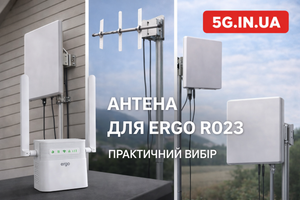
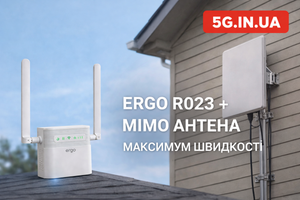
ERGO R023 includes two SMA connectors for MIMO antennas. This allows you to:
-
install a directional antenna on a wall or roof,
-
improve RSRP and SINR,
-
operate at the edge of coverage.
Most USB modems:
-
lack full-size antenna connectors,
-
rely on internal micro-antennas,
-
sometimes support TS9/CRC9 connectors, but with limited capability.
Engineering logic is straightforward:
LTE performance depends on signal quality. If signal strength is −105 dBm, speed will be limited regardless of the data plan. An external antenna can improve signal to −85 dBm — significantly increasing throughput.
A USB modem without proper antenna support cannot compensate for weak coverage.
Autonomy and Operation During Power Outages
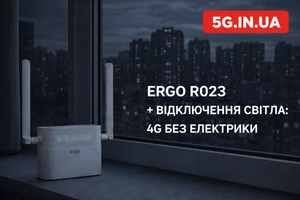
ERGO R023 has a built-in 4000 mAh battery. This provides:
-
several hours of operation without electricity,
-
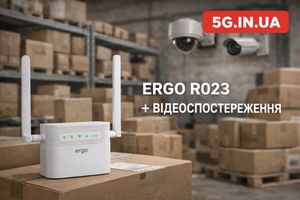
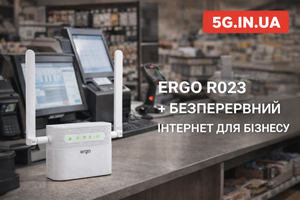
stability for video surveillance, POS systems, and remote access.
A USB modem has no independent power source. If the laptop battery dies or the router loses power — internet stops.
In real-world conditions with unstable electricity, this difference matters.
LAN Infrastructure and Scalability
ERGO R023 allows you to:
-
connect PCs, NAS, or DVR systems via Ethernet,
-
expand the network through a switch,
-
integrate into existing infrastructure.
A USB modem has no LAN ports. Building a full network requires an additional router that supports USB modems, increasing complexity.
In practice:
USB modem + router = two potential points of failure.
ERGO R023 = a single integrated solution.
LTE Cat.4 Performance in Practice
Both ERGO R023 and most USB modems support LTE Cat.4.
Theoretically: up to 150/50 Mbps.
In reality, speed depends on:
-
base station load,
-
frequency band (900/1800/2600 MHz),
-
signal level,
-
interference.
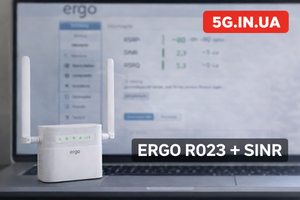
ERGO R023 provides access to engineering parameters through its web interface:
-
RSRP,
-
RSRQ,
-
SINR.
This allows proper antenna alignment and signal optimization. Many USB modems provide limited diagnostic information.
When a USB Modem Makes Sense
A USB modem is logical if:
-
you need internet for a single laptop,
-
maximum portability is required,
-
usage is short-term,
-
there is no need for a local Wi-Fi network.
For example:
A journalist on assignment or a field technician on-site.
When ERGO R023 Is Technically Justified
ERGO R023 is justified if:
-
multiple devices need internet access,
-
Wi-Fi and LAN connectivity are required,
-
operation during blackouts is important,
-
signal is weak and external antennas are needed,
-
a business requires backup connectivity.
For homes, shops, warehouses, or rural properties, this is a more rational choice.
Limitations
ERGO R023 limitations:
-
LTE Cat.4 without carrier aggregation — not maximum speed in large urban areas.
-
Wi-Fi only 2.4 GHz — potential interference in dense buildings.
-
No 5G support.
-
Less portable than a USB modem.
USB modem limitations:
-
No autonomous power supply.
-
Dependent on a computer or router.
-
Limited external antenna support.
-
No built-in network infrastructure.
-
Higher instability risk during continuous operation.
Economic Logic
A USB modem is cheaper as a standalone device.
However, if you add:
-
a compatible router,
-
an external antenna,
-
backup power,
cost and complexity increase.
ERGO R023 integrates these capabilities into a single device.
ERGO R023 as a Complete 4G Solution
In practical deployment, ERGO R023 often becomes:
-
the main internet source in a private house,
-
a backup channel in an office,
-
a connectivity solution for retail locations,
-
part of a 4G kit with a directional antenna.
USB modems are rarely used as long-term infrastructure.
Conclusion
ERGO R023 and a USB modem represent different levels of solution.
A USB modem is a portable tool for a single device.
ERGO R023 is a full 4G LTE router with autonomy, LAN integration, and external antenna support.
If the goal is simply “connect a laptop,” a USB modem is sufficient.
If the goal is “build stable 4G internet for home or business,” ERGO R023 is the technically sound choice.
On 5G.IN.UA, ERGO R023 is available with detailed specifications, antenna recommendations, and real deployment scenarios. Before choosing, define your load and signal conditions — then select the appropriate solution.
FAQ
1. Is ERGO R023 faster than a USB modem?
Theoretically similar (Cat.4). In practice, ERGO R023 may be more stable due to antenna options and independent power.
2. Can a USB modem share Wi-Fi?
Yes, via a laptop hotspot or an additional router, but this increases complexity.
3. Does ERGO R023 support external antennas?
Yes, two SMA connectors for MIMO antennas.
4. Does ERGO R023 work without electricity?
Yes, it has a built-in battery.
5. Is a USB modem suitable for a shop?
Only as a temporary solution. For permanent operation, a dedicated 4G router is recommended.
6. Does ERGO R023 support 5G?
No, it is a 4G LTE device.
7. What is better for rural areas with weak signal?
ERGO R023 combined with a properly selected external antenna provides better control over signal quality.
ERGO R023 is not just an alternative to a USB modem — it belongs to a different class of equipment. The choice should be based on stability, scalability, and real network requirements.