Starlink Direct to Cell: an interesting technology, but overhyped and of minimal practical value
Short conclusion
Starlink Direct to Cell is technically interesting, but practically of little value in its current form. Its real capabilities do not justify the scale of government and media hype, and the declared benefits do not meet the needs of either civilian users or the military in Ukraine.
What this technology is actually designed for
If we strip away press releases, Starlink Direct to Cell solves a very narrow problem:
-
sending small amounts of text (SMS);
-
in the complete absence of any terrestrial network;
-
under open sky only;
-
outside combat zones and border areas.
This is not mobile communication.
This is not internet access.
It is not even a full-fledged emergency communication system.
It is a minimal “life signal”, a technological proof of concept.
Why it does not work where it is actually needed
1. Combat zones — the core contradiction
The technology officially does not operate:
-
in active combat zones;
-
in temporarily occupied territories;
-
in border regions.
That is exactly where:
-
terrestrial infrastructure is destroyed;
-
communication is critical;
-
even an SMS may have life-or-death value.
From a military perspective, this makes the technology largely unusable.
2. For civilians — near-zero practical benefit
For an average civilian user:
-
if 4G is available — Direct to Cell is unnecessary;
-
if 4G is unavailable but Starlink is available — Starlink is vastly superior;
-
if nothing is available — SMS with limited reliability solves very little.
In practice, this technology does not improve daily connectivity, does not replace mobile service, and does not create meaningful new use cases.
Why “internet in 2026” is a weak argument
Even under optimistic assumptions:
-
expected speeds are extremely low (around ~1 Mbit/s or less);
-
with unstable signal quality;
-
limited uplink;
-
unpredictable latency.
This is not LTE, not 4G, and not even a functional substitute.
It is a level suitable only for basic text and telemetry.
Why the hype looks disproportionate to reality
Clear signs of overhyping:
-
phrases like “a global technological breakthrough”;
-
emphasis on the number of SMS instead of connection quality;
-
silence about limitations and restricted zones;
-
no clear answer to the question: who exactly is this for?
The technology is presented as an event, not as a tool.
This is classic image-building through novelty, not through utility.
Who this technology may actually be useful for
Honestly and without illusions:
-
engineers as an experimental platform;
-
operators testing new network architectures;
-
developers of low-bandwidth IoT beacons;
-
rare civilian scenarios where absolutely nothing else is available.
This is a niche solution, not a mass-market technology.
Comparison with real alternatives
| Solution | Real-world usefulness |
|---|---|
| Terrestrial 4G | Full mobile connectivity |
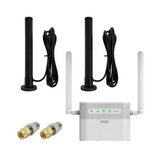
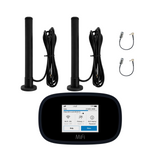
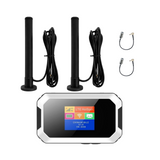
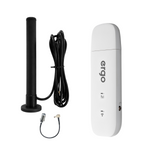
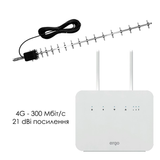
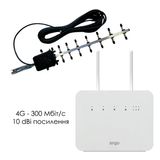
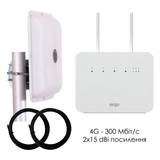
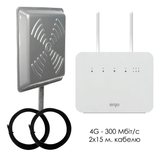
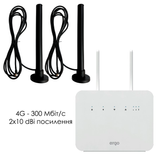
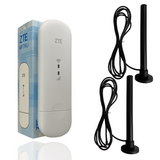
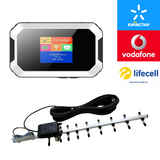
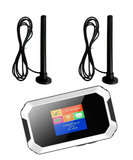
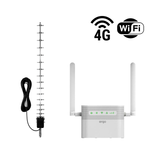
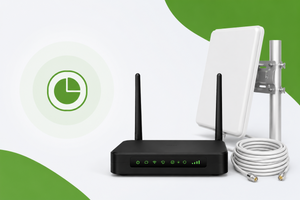
| Directional LTE antennas | Reliable operation at 10–30 km |
| Classic Starlink | Full internet and VoIP |
| Starlink Direct to Cell | SMS under strict conditions |
Starlink Direct to Cell is not fake, but it is not a user-level breakthrough.
It is a technology with potential, but without practical implementation in Ukraine’s key scenarios.
For the war — largely useless.
For civilians — mostly unnecessary.
For PR — convenient.
And that is why the scale of its promotion does not match its real-world value.